
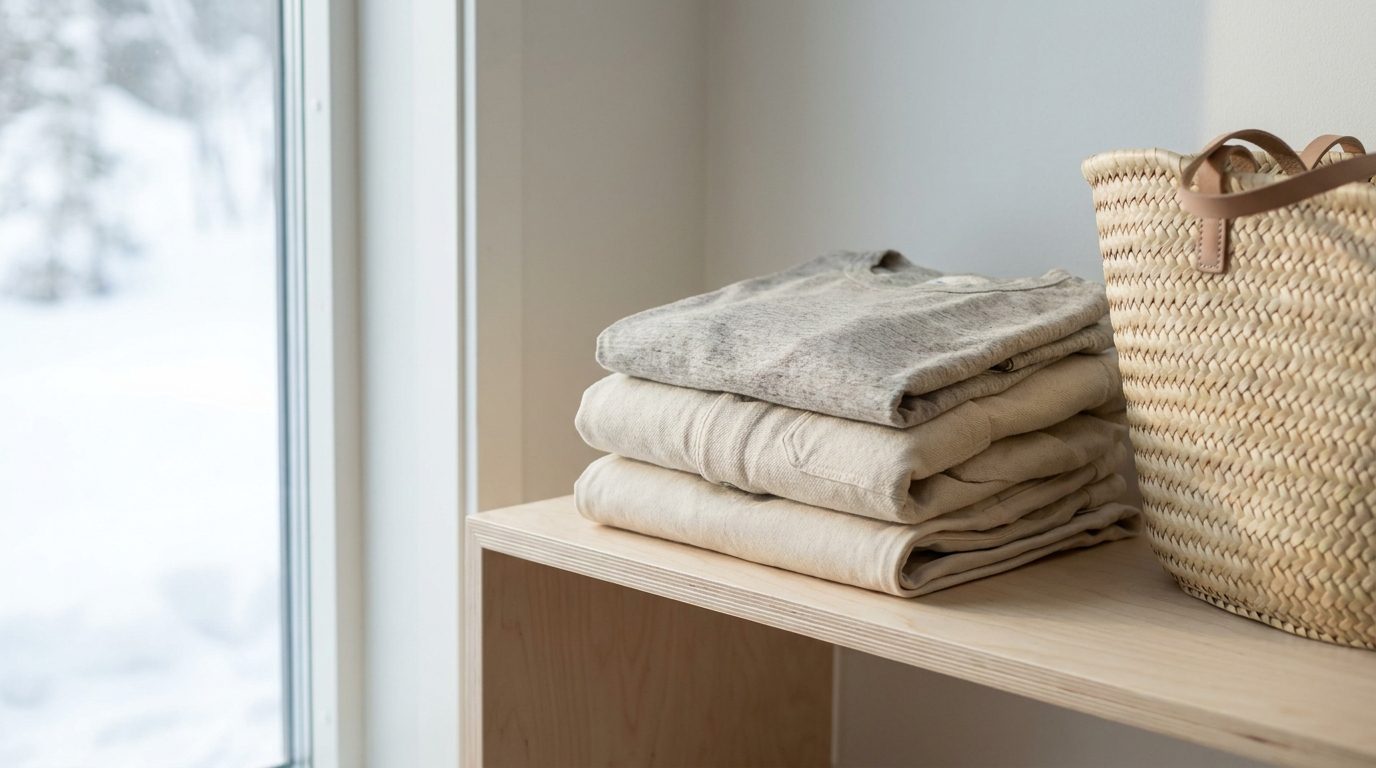
Hemp clothing in Canada is a small, real market with a long history: a handful of dedicated brands, a few mills and importers, and a growing blend presence inside mainstream lines. Here is the honest lay of the land for a buyer.
What the Canadian market looks like
Canada has hemp apparel brands with decades of continuous operation, concentrated on the West Coast, alongside newer labels working with hemp-cotton and hemp-Tencel blends. Most garments sold here are sewn from imported hemp textile, because Canada grows fibre hemp but still has limited domestic spinning and weaving capacity; design, cutting, and sewing happen here far more often than the fabric itself. That is the supply-chain reality across the entire Western hemp apparel market, not a Canadian shortcoming.
What to expect from the garments
Pure hemp pieces feel like sturdy linen: crisp at first, softer every wash, near-indestructible at the seams. Blends dominate the racks for good reason; 45 to 55 percent hemp with cotton keeps the durability and drapes more conventionally. Expect to pay above fast-fashion prices and below technical outdoor wear, with the cost defended by lifespan rather than logo.
How to judge a hemp garment
- Fibre percentage on the label. "Hemp blend" can mean 15 percent; the number matters.
- Weave density. Hold it to light; hemp rewards tight weaves and outlasts loose ones.
- Seams and stress points. Hemp fabric outlives cheap construction; flat-felled seams and bar tacks signal a garment built to use the fibre's strength.
- Care honesty. Hemp machine-washes well and prefers line drying; brands that say so understand their fabric.
Finding the brands
Canadian hemp clothing makers and textile suppliers appear in our business directory, alongside the processors covered in hemp textiles. For the fibre fundamentals behind the garments, start with bast and hurd.