
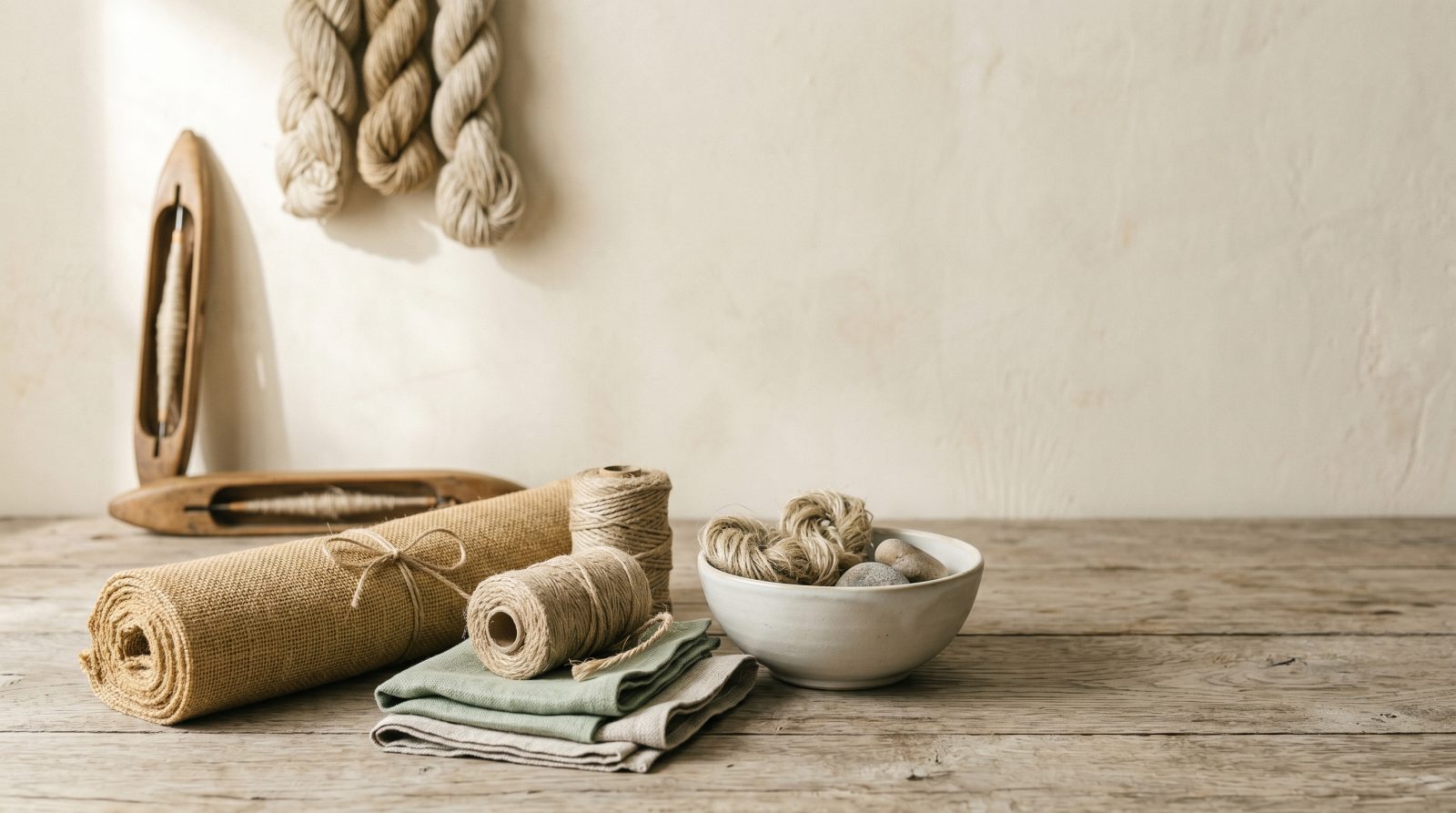
Hemp textiles are made from hemp bast fibre. The fibre's tensile strength, breathability, and natural antimicrobial properties make it suitable for clothing, upholstery, and technical textiles. The Canadian hemp textile industry is small but growing, with most production currently dependent on processing infrastructure outside Canada.
Hemp fibre properties for textiles
Hemp bast fibre brings several characteristics relevant to textile manufacturing:
- Tensile strength. 2 to 3 times stronger than cotton fibre, making hemp fabrics durable.
- Breathability. Natural moisture-wicking properties similar to linen.
- Thermal regulation. Hemp fabrics keep wearers cool in heat and warm in cold.
- UV resistance. Natural UV blocking, with measurable protection factor in dense weaves.
- Antimicrobial properties. Resistance to mould, mildew, and odour-causing bacteria.
- Reduced shrinkage compared to cotton after washing.
- Increased softness over time. Hemp fabric becomes softer with each wash, unlike cotton which loses structural integrity.
From plant to fabric
The process of producing hemp textiles:
- Cultivation of fibre hemp varieties
- Field retting (dew retting) or water retting to loosen bast fibres
- Decortication: mechanical removal of bast from hurd
- Hackling: combing to align bast fibres and remove short pieces
- Cottonization or steaming: treatments to soften the fibre for spinning
- Spinning into yarn
- Weaving or knitting into fabric
- Finishing: dyeing, treatment, fabric preparation
Hemp textile applications
- Clothing. Particularly t-shirts, summer wear, jackets. Often blended with cotton for softness.
- Denim. Hemp-cotton blends for jeans and similar work garments.
- Bedding and linens. Sheets, pillowcases, towels (especially blended with linen).
- Upholstery. Sofas, curtains, decorative fabrics.
- Technical textiles. Sails, ropes, industrial filters, geotextiles.
- Sustainable fashion. Brands targeting environmental positioning.
Hemp versus cotton in textiles
| Attribute | Hemp | Cotton |
|---|---|---|
| Water requirement (cultivation) | Low | High |
| Pesticide requirement | Minimal | Significant (conventional) |
| Yield per acre | 2-3x cotton | Lower |
| Fabric durability | Higher | Lower |
| Initial softness | Lower | Higher |
| Softens with use | Yes | No (degrades) |
| UV protection | Higher | Lower |
| Carbon sequestration | Higher | Lower |
| Processing complexity | Higher | Established infrastructure |
| Retail availability | Limited | Universal |
The Canadian hemp textile market
Canadian hemp textile production is small. Most "Canadian hemp clothing" brands source fabric from established hemp textile producers in China, India, or Eastern Europe, where processing infrastructure is mature. Domestic Canadian processing capacity is growing but remains limited.
For consumers buying hemp clothing in Canada, the fabric is typically:
- Imported finished fabric
- Cut and sewn locally or imported as finished garments
- Often blended with organic cotton or recycled materials
- Premium-positioned compared to commodity cotton
Sustainability claims
Hemp's textile sustainability story is generally well-supported but should not be overstated. Specific claims to evaluate carefully:
- Water use: Yes, hemp uses significantly less water than conventional cotton.
- Pesticide use: Yes, hemp typically requires minimal pesticides.
- Carbon sequestration: Hemp absorbs CO2; the durability of that sequestration depends on the textile's use lifespan.
- Biodegradable: Pure hemp fabric biodegrades. Blends with synthetic fibres do not.
- Recyclable: Hemp fibres can be recycled multiple times before quality loss.